

Engineered stone — composed of approximately 93% quartz and 7% polyresin — has become one of the most popular countertop materials in the industry. But for stone fabricators, polishing this hard, abrasive material presents a unique challenge: engineered stone is notoriously tough on polishing pads, wearing them out far faster than natural stone. Choosing the right diamond polishing pads is therefore essential for achieving a high-quality finish while maximizing tool lifespan and productivity.
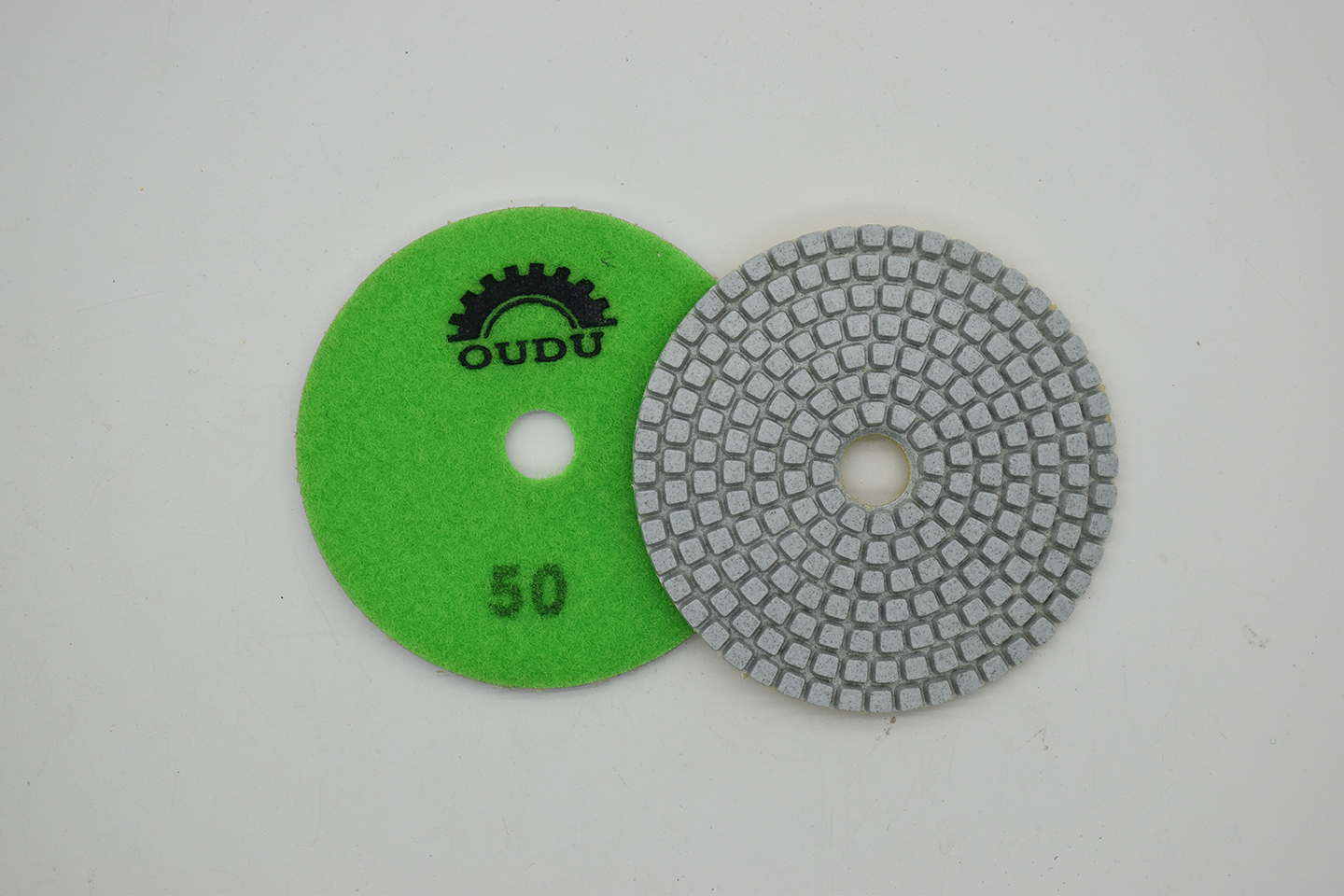
Understanding the Challenge of Engineered Stone
Unlike natural marble or granite, engineered stone combines high quartz content with resin binders, creating a surface that is both extremely hard and chemically abrasive. This composition requires polishing pads specifically engineered to handle the material’s aggressive wear characteristics. Standard polishing pads that perform well on natural stone often fail prematurely when used on engineered stone, leading to inconsistent results, increased costs, and project delays.
Wet vs. Dry Polishing: Which Is Better for Engineered Stone?
The debate between wet and dry polishing pads applies to engineered stone as well, though the material’s composition often tips the scales in favor of wet processing.
Wet polishing pads are designed to be used with water cooling during the grinding process. Water provides superior cooling, reduces dust, extends tool lifespan, and helps achieve an excellent finish quality. For engineered stone, which is particularly prone to heat damage and resin discoloration, wet polishing is generally the preferred method. Many manufacturers explicitly recommend wet polishing for engineered stone applications.
Dry polishing pads offer greater convenience for on-site work, eliminating the need for a water supply and cleanup. However, dry polishing generates more dust and provides less cooling, which can be problematic when working with heat-sensitive engineered stone. Some modern hybrid pads are designed to work effectively in both wet and dry conditions, offering fabricators greater flexibility.
Key Factors in Selecting Polishing Pads for Engineered Stone
When choosing diamond polishing pads for engineered stone, fabricators should consider several critical factors:
Grit Sequence. Polishing engineered stone requires a progressive grit sequence to achieve a factory-quality finish. A typical recommended progression for engineered stone begins with wet diamond discs at grits 50, 100, and 200, followed by dry pads (used with water) at 400, 800, 1,500, and 3,000, with a final luster achieved using an 8,500-grit wet turboflex pad. Alternative sequences range from 3-step systems (which consolidate multiple grits into three pads) to 6-step or 7-step systems for more refined results.
Bond Type. Resin-bond diamond pads are the most common choice for engineered stone polishing. These pads offer the flexibility needed to conform to surface contours while providing effective material removal. For engineered stone specifically, white resin pads are often recommended because they will not stain the material.
Diamond Concentration. Higher diamond concentration can improve tool lifespan and cutting stability, particularly under heavy industrial applications. Pads with high diamond concentration are especially valuable for engineered stone, given the material’s aggressive wear on tooling.
RPM and Operating Parameters. Operating speed significantly affects pad performance and lifespan. For engineered stone polishing, recommended RPM ranges vary by grit: coarser grits (50–100) typically perform best at 1,000–2,000 RPM, while finer grits can be run at higher speeds up to 5,000 RPM. Most manufacturers recommend keeping speeds below 4,500–5,000 RPM to avoid overheating and pad failure.
Common Problems and Solutions
Even with the right pads, fabricators may encounter issues during engineered stone polishing:
Overheating is a frequent problem, typically caused by excessive RPM, insufficient cooling, or incorrect bond selection. Solutions include reducing speed, ensuring adequate water flow for wet polishing, and selecting the appropriate bond hardness for the material.
Vibration may result from machine instability, flange issues, or improper pad installation. Regular equipment maintenance and proper mounting procedures can prevent these issues.
Uneven polishing often occurs due to incorrect grit sequencing or unstable polishing movement. Following the recommended grit progression and maintaining consistent pressure and movement are essential for achieving uniform results.
Tips for Maximizing Performance and Lifespan
To get the most from diamond polishing pads on engineered stone, fabricators should:
Use the correct RPM for each grit stage
Select a suitable bond hardness for the specific engineered stone being processed
Maintain proper cooling—water is strongly recommended for engineered stone
Avoid excessive pressure, which can cause premature pad wear and heat buildup
Follow the correct grit sequence without skipping steps
Start with lower grits at low RPM and adjust as needed throughout the polishing process
Conclusion
Professional diamond polishing pads designed specifically for engineered stone can significantly improve cutting efficiency, polishing quality, and processing stability. With engineered stone’s unique composition presenting exceptional challenges to tooling, choosing the correct specifications and operating parameters is essential for achieving optimal results.
Whether fabricators prefer wet, dry, or hybrid polishing systems, investing in high-quality diamond pads engineered for engineered stone applications pays dividends in extended tool life, superior finish quality, and reduced rework. As the engineered stone market continues to grow, having the right polishing solution is no longer optional—it’s a competitive necessity.
Looking for Professional Diamond Tool Solutions?
Quanzhou Tianli Grinding Tools Co., Ltd. provides professional diamond tools for the granite, quartz, marble, and engineered stone processing industries.
Contact us for OEM manufacturing, product catalogs, and technical support.
Post time: Jul-02-2026


