

Diamond polishing pads are widely used in granite, marble and quartz polishing. Choosing between wet and dry polishing pads depends on the stone material, polishing environment and finishing requirements.
What Are Dry Polishing Pads?
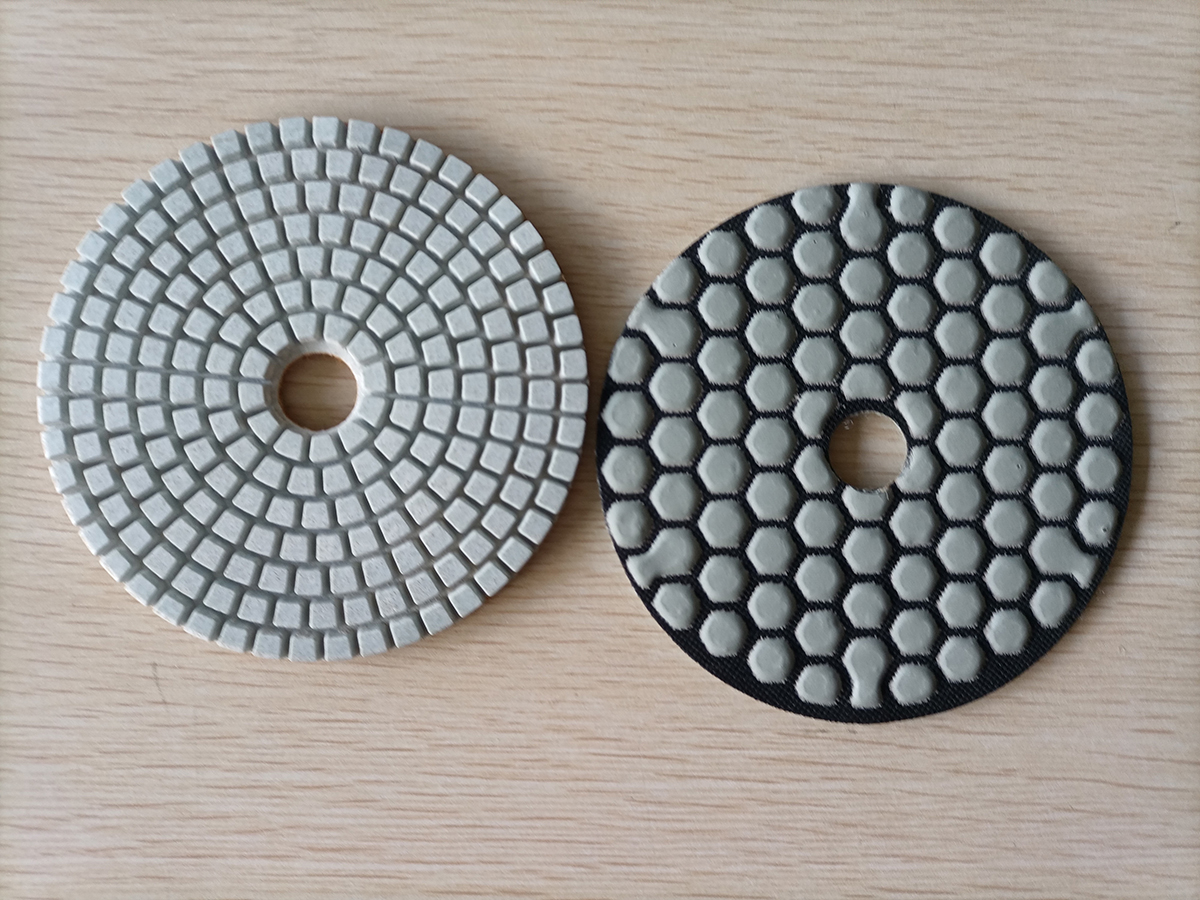
Dry polishing pads are diamond resin polishing tools designed for stone polishing applications without water cooling. They are commonly used for granite countertops, quartz surfaces and edge polishing.
What Are WET Polishing Pads?
Water polishing pads, also known as diamond soft polishing pads, is a flexible grinding tool made of materials such as diamond and resin. It is an efficient grinding tool used in conjunction with water flow during the grinding process and is widely used for surface treatment of hard materials such as stone, concrete, and ceramic tiles.
Main Applications
Suitable for:
u Granite countertops
u Quartz countertops
u Marble slabs
u Stone edge profiling
u Construction material processing
u Floor polishing
Comparison
Wet and Dry Comparison
|
Feature |
Wet Pads |
Dry Pads |
|
Cooling |
Better |
Moderate |
|
Dust |
Lower |
Higher |
|
Convenience |
Lower |
Higher |
|
Finish Quality |
Excellent |
Very Good |
Technical Explanation
Recommended RPM:
The recommended operating speed depends on machine type, bond hardness, stone material and grit size.
Bond Type:
Soft bond tools are usually recommended for hard stone materials, while hard bond tools are more suitable for softer stone applications.
Diamond Concentration
Higher diamond concentration may improve tool lifespan and cutting stability under heavy industrial applications.
Common Problems of the dry / wet polishing pads
1. Overheating:
Overheating is usually caused by excessive RPM, insufficient cooling or incorrect bond selection.
2. Vibration
Blade vibration may result from machine instability, flange issues or improper installation.
3. Uneven Polishing
Uneven polishing often occurs due to incorrect grit sequence or unstable polishing movement.
Solutions
How to Improve Performance
u Use the correct RPM
u Select suitable bond hardness
u Maintain proper cooling
u Avoid excessive pressure
u Use correct grit sequence
Buying Guide
How to Choose the Right wet and dry polishing pads
Consider:
u Stone material
u Machine compatibility
u Dry or wet application
u Processing speed
u Surface finishing requirements
u Tool lifespan
FAQ
1. What is the best RPM for dry /wet polishing pads?
The recommended RPM depends on the tool diameter, material hardness and machine type.
2. Can wet and dry polishing pads be used on quartz?
Yes. Professional diamond tools are suitable for quartz, granite and engineered stone processing.
3. Why does the tool overheat?
Overheating is commonly caused by high RPM, poor cooling or excessive pressure.
4. Wet and dry application?
Wet processing usually provides better cooling and longer lifespan, while dry processing offers higher convenience for on-site work.
5. How to increase tool lifespan?
Use proper cooling, stable feed speed and suitable bond hardness.
6. Which tools are best for granite?
Professional diamond blades, polishing pads and grinding wheels designed for granite applications.
Conclusion
Professional diamond tools can significantly improve cutting efficiency, polishing quality and processing stability for stone fabrication applications.
Choosing the correct tool specifications and operating parameters is essential for achieving optimal processing performance.
Looking for Professional Diamond Tool Solutions?
Quanzhou Tianli Grinding Tools Co., Ltd. provides professional diamond tools for granite, quartz, marble and concrete processing industries.
Contact us for OEM manufacturing, product catalogs and technical support.
Post time: May-29-2026


